This blog was written by Casey Kunzer, MT-BC On March 1st myself and my colleague Lauren had the opportunity to attend and present at SUNY Fredonia’s Mini Music Therapy Conference. Our presentation, “Becoming MT-BCs,” aimed to educate and empower student music...
Neurodiversity and Music Therapy
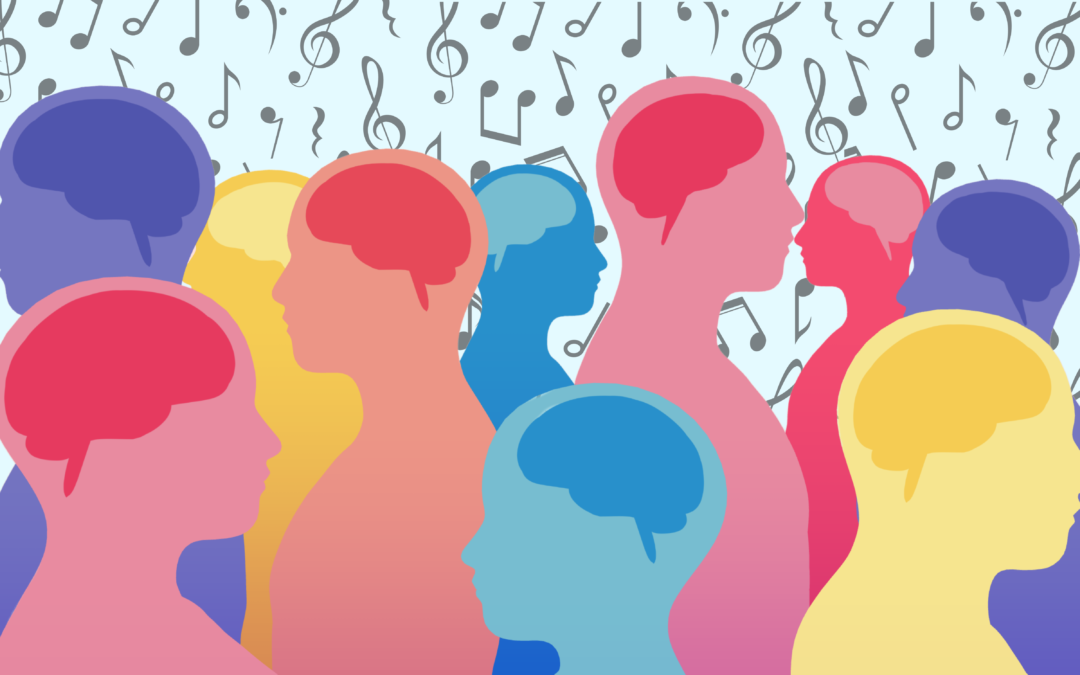
Have you heard of the word neurodiverse? Judy Singer came up with this term in the late 1990s. Judy is a sociologist who learned, after recognizing her differences from other children her age, that she was on the autism spectrum. Judy never considered herself to be disabled, but different in the way she perceived and navigated the world. Her brain functioned in a way that created tense moments when it came to socializing and navigating school. The lack of understanding by others and her own confusion on how to feel about her brain processing differently than her peers created some challenging times for her over the years.
Once Judy began to embrace that there is diversity in the way that people learn, this allowed her to begin seeing the world in a different way. Disabled turned into diverse, a much more positive and accepting term. Instead of posing the question, “What is wrong with her?” we can now look through the lens of neurodiversity and instead ask, “What is different about her?” With the understanding that all children learn in different ways and that diversity makes each child unique, a path was carved to begin building resilience, self-confidence, and hope for the future.
Individuals who are neurodiverse, as all children and adults, have a range of learning needs. In some cases, these include improving motor and communication skills. As we look at these two areas you will note the natural and obvious aspects of music that pair beautifully for skill development in neurodiverse individuals. Board Certified Music Therapists are trained to complete assessments and create specific plans regardless of the person’s learning style, limits, and abilities. Music Therapists work with individuals of all ages, however, for this blog, we will focus on the learning needs of children.
Children move at a functional pace of about 120 to 135 beats per minute, which is faster than adults. For children who struggle with gross motor movement, the rhythm of a song played using the tempo that most accompanies a natural gait provides wonderful support for working on motor needs. As a child marches, walks, or jumps to a steady beat, their body becomes increasingly organized, allowing them to feel more confident and steadier.
When neurodiverse children find themselves unable to use their right and left hands together to complete a project in class, they become frustrated and many times give up. The music therapist offers the child mallets, rhythm sticks, piano, guitar, and other instruments requiring two-handed motor movement. As they play along to a piece of music, they engage for a sustained amount of time to rehearse the movement. Because their brain recognizes the structure of the song, when it will begin and end, they successfully complete the song, many times without requiring a break. This success can then be carried over into the classroom when participating in a non-music task.
Using language in a functional way to communicate and have engaging interactions with others is vital for human beings. For individuals who are neurodiverse, they might struggle with the ability to have a reciprocal conversation with a classmate or friend using language. Neurological differences present unique challenges, particularly related to communication. A child who has neurological challenges may have a limited understanding of how, when, and why they interact verbally with a peer or teacher. A few areas for consideration are timing, pacing, and processing. Music Therapy creates a setting for individuals with neurodiversity to practice these three areas.
For children experiencing speech and language problems, rhythmic singing can provide pathways to circumvent damaged neural networks. This is possible because music is received by both hemispheres in the brain and can be incorporated into therapy for challenges such as apraxia, aphasia, stuttering, or even getting a nonverbal child to utter their first syllable.
To illustrate, a nonverbal child might try to hum or sing (possibly on “la la”) two notes of the singsong notes of childhood. The therapist will time this intervention to determine a music tempo, which aligns with the rate at which the child can successfully create the vocal sounds. This occurs when the child is in an environment that is safe and stress-free to assure that the vocal sounds will freely flow with less potential for vocal restriction. The goal is to increase the pace, as appropriate, to eventually match a typical rate of speech. Pauses in music are just as powerful as the musical sound itself. It is in the pauses that the neurodiverse child has the opportunity to process what comes next, prepare their mind and mouth to produce the next sound, and wait when necessary for a peer to take their turn to vocalize. This is the beginning of reciprocal communication, a musical conversation. Vocalizing back and forth on melodic notes, learning when to speak and when to wait. The therapist assists the child in progressing to greeting words and responses to those greetings as they are sung back and forth between the children.
We must always remain cognizant that each person is individual, and what works for one may not work for another. This is where a Board-Certified Music Therapist’s training is imperative. Music therapy sessions with clients are always changing according to the child’s need within the session and how they respond to any given technique. A Music Therapist can change the key to the music, the tempo, the style, and the dynamic in a way in which to meet the need and create opportunities for successful participation.
For more information on Music Therapy and the Neurodiverse child please click on CONTACT US and send us a message.
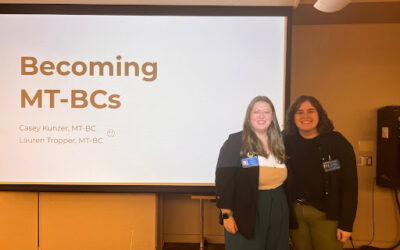
Becoming MT-BCs: Presented by Casey Kunzer, MT-BC
World Music Therapy Week 2024
This blog was written by Robin Neary and Amy Thomas. Happy World Music Therapy week! It brings us joy to know that all around the world music therapists are coming together to celebrate and educate our communities on our profession. This year, Upstate Music Therapy...
Current Events: Marcus Whitman Community Partnership Event
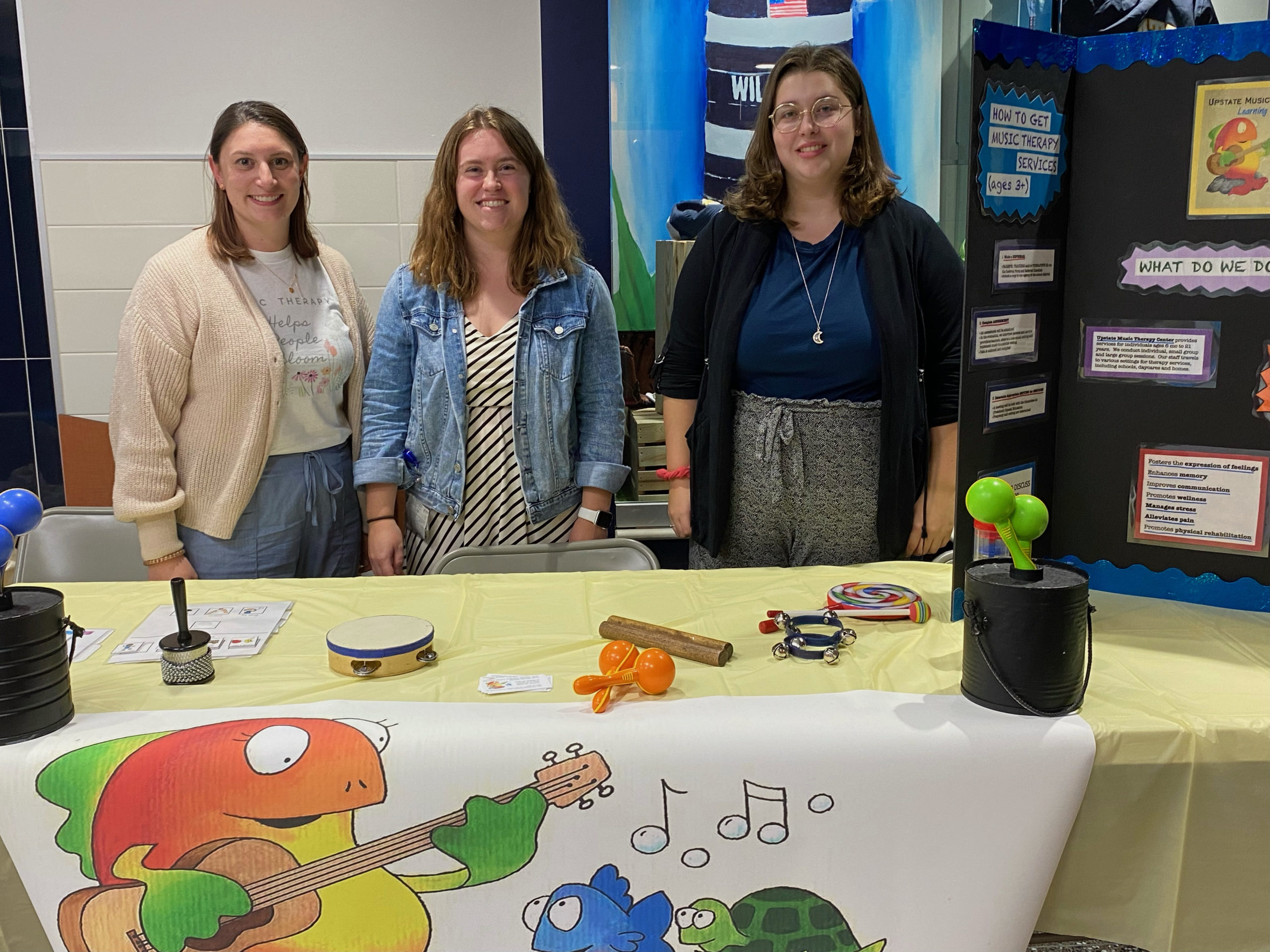
This blog post was written by Robin Neary, MT-BC This month, Upstate Music Therapy Center employees Robin Neary, MT-BC, Jamie Swieringa, MT-BC, and Casey Kunzer, MT had the pleasure of attending Marcus Whitman School District’s Community Partnership Event. Families,...